
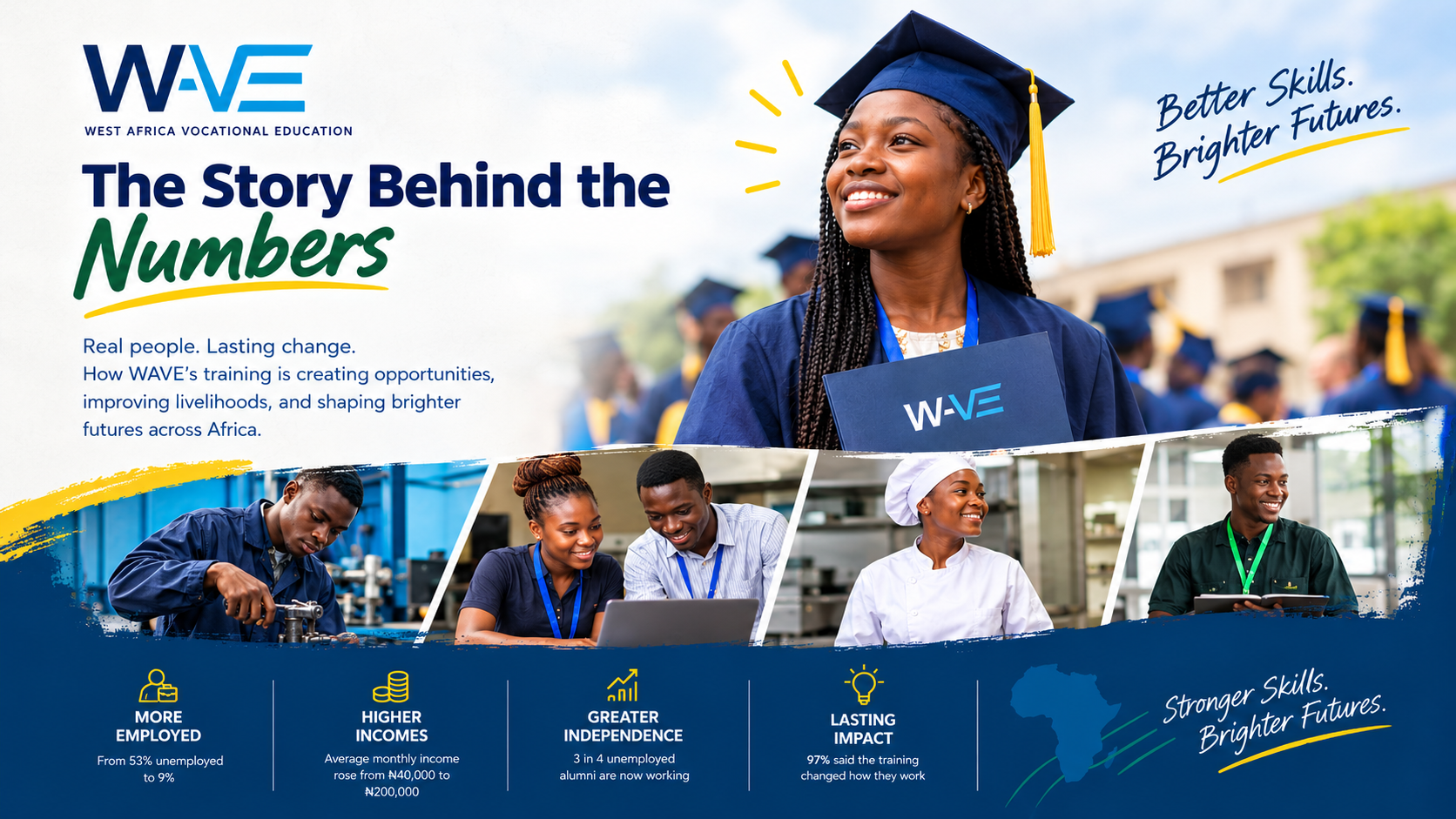
A young person completes a training programme. They receive a certificate. They leave excited, hopeful, and ready to find a job.
And then what?
Do they find work? Does their income improve? Are they able to use what they learned? And perhaps the most important question: did the programme change anything beyond the classroom?
These are the questions organisations working in youth development and employability should be asking. At WAVE, we recently went back to our alumni to find out.
Our latest alumni follow-up reached more than 1,500 alumni records and produced completed surveys with 660 alumni, or 41% of those tracked. That response rate means the findings should not be treated as representative of every WAVE graduate, and the follow-up cannot tell us that WAVE caused every change respondents reported. But it gives us a valuable glimpse into what happens to young people after they leave the programme, and some of the numbers tell an encouraging story.
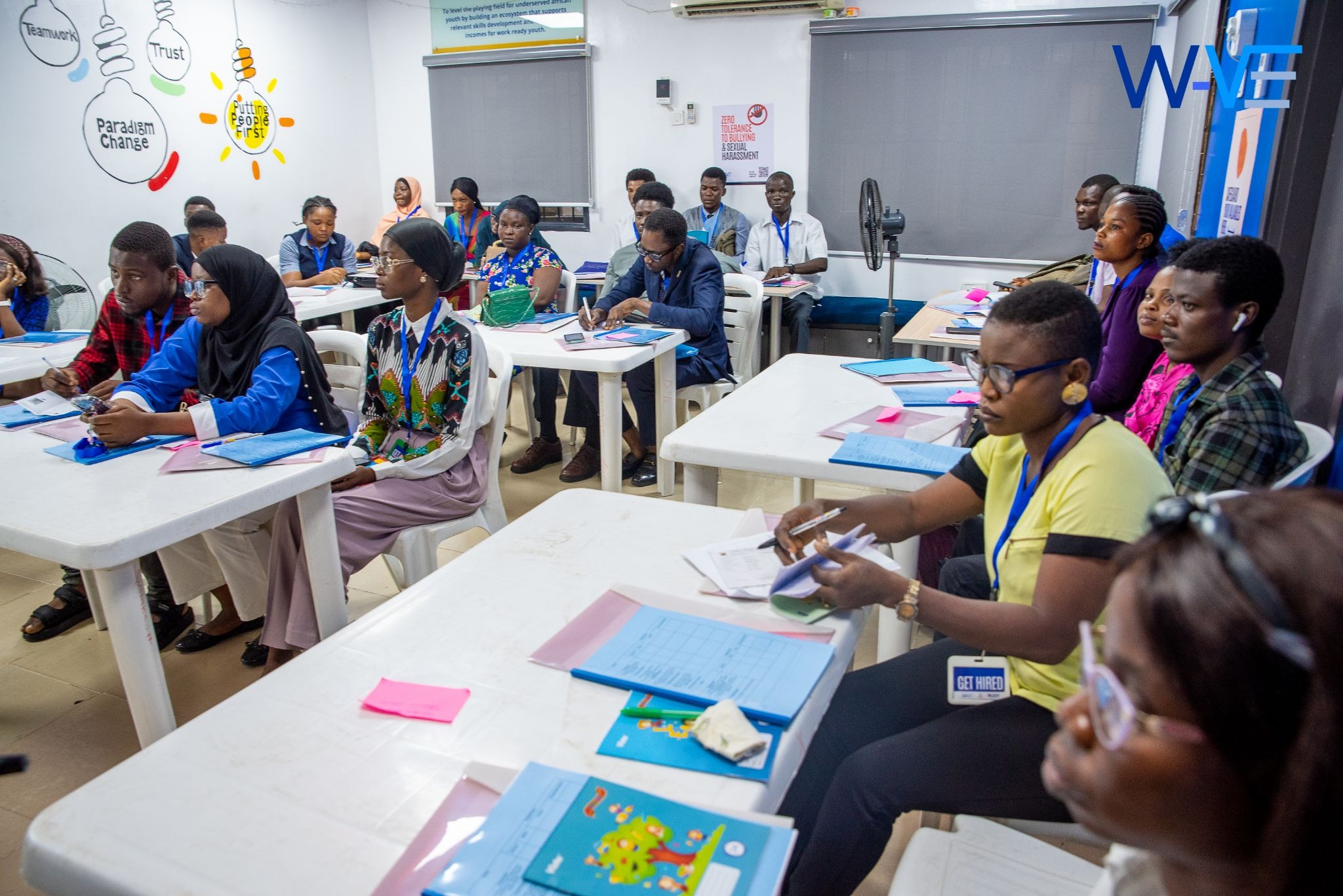
Before joining WAVE, unemployment was a major reality for many of the alumni we reached. Among the 597 alumni whose employment status was known both before WAVE and at the time of the follow-up, unemployment fell from 53% to 9%. Full-time employment rose from 24% to 48%, and self-employment from 22% to 36%.
The picture is clearer still among alumni who were unemployed before joining WAVE. Of the 318 in that group, 240 (75%) are now working: 148 in full-time employment and 92 self-employed. Another 35 have returned to school. Put simply, three in four alumni who began unemployed are now working.
That matters because it shows there is no single path from training to economic activity. For some, the next step is a full-time job. For others, it is self-employment, or going back to school to build towards another career. The goal should not be to move everyone into the same outcome. It should be to give people enough skills, confidence and exposure to create different paths for themselves.
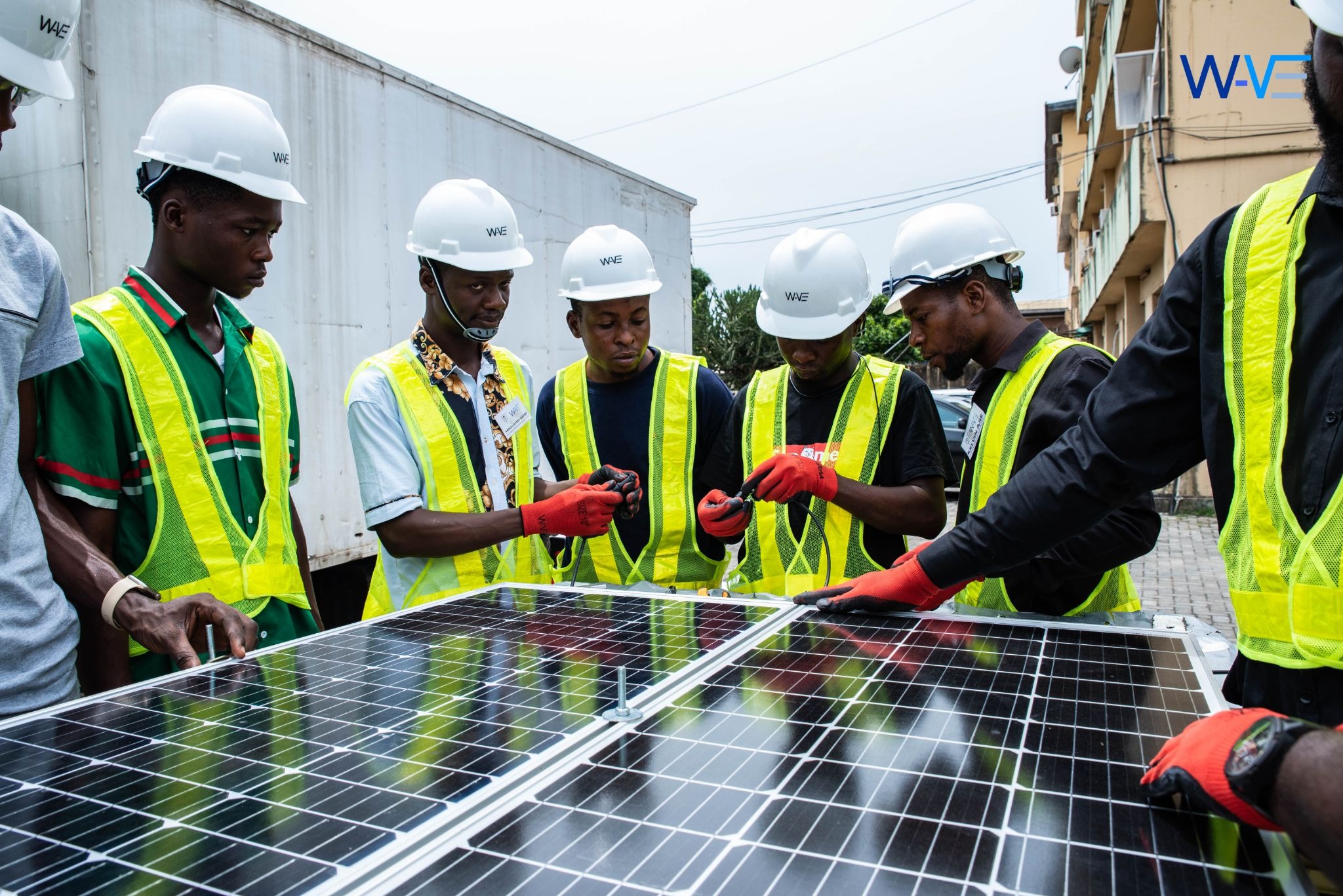
Among 343 employed alumni who told us how they found their current jobs, 85% said they found their roles through their own job search. Only 6% said they were directly placed by WAVE.
That may look like a small detail. It isn't. It suggests that WAVE's role may go beyond connecting someone to an employer. The bigger value may lie in helping young people navigate the labour market themselves: searching and applying for jobs, presenting themselves professionally, communicating well and taking opportunities when they appear.
This is something we emphasise during the programme, because getting a job should not depend on WAVE placing you. If a programme works, graduates should eventually be able to find their way without us standing beside them. That may be one of the more sustainable measures of impact.
Employment tells us whether someone is working. Income tells us what that work is worth to them economically.
Among the 182 alumni who provided both their income before WAVE and their current income, average monthly income rose from ₦40,000 to ₦200,000. That is five times higher among these matched respondents.
Even that does not tell the whole story. Of the 182, 165 reported earning more than they did before WAVE, roughly nine in ten. Eleven reported no change and six reported earning less.
The ₦70,000 minimum-wage benchmark sharpens the picture. Before WAVE, only 33% of alumni with known incomes earned at or above it. At the time of the follow-up, 91% did. Some 72% were earning at least twice the benchmark and 37% at least three times it. Among those who started below ₦70,000, 86% had moved to or above that level. For many alumni, that is a real shift in economic capacity.
It is easy to celebrate a higher salary. But income is not the impact. What it makes possible is closer to the impact.
For an alumnus or alumna, earning more can mean contributing to household expenses, paying rent and utility bills with less pressure, supporting a younger sibling or parents, or having the financial room to make choices that were previously difficult.
The transformation is not simply ₦40,000 becoming ₦200,000. It is what the additional ₦160,000 makes possible. That is why we should not stop at asking, "Did their income increase?" We should also ask, "What changed because their income increased?"

When asked whether WAVE training had changed how they work, 97% of respondents said it had. Some 79% said their work had improved "very much" and another 18% said "slightly".
One alumnus described receiving two opportunities after WAVE, first as an attendant and later as a Production Supervisor, and said they were able to apply what they learned not only at work but in their wider life. Other alumni spoke about job opportunities, increased confidence and soft skills that kept helping them after the programme.
The value of training should not be measured only by whether someone gets their first job. A stronger question is whether the person became better equipped to perform, adapt, grow and pursue opportunities after leaving. Getting someone into their first job is one milestone. Helping them build the capacity to navigate the next five years of their career is a much bigger ambition.
Among the 317 alumni who identified their employment sector, the largest groups were in Hospitality and Tourism, and Banking, Finance and Insurance, followed by Education and Training, Manufacturing and Production, and Information and Communication Technology.
That spread suggests the skills developed through the programme can travel across industries and roles. It also reinforces a point for organisations designing employability programmes: training people for one job is different from preparing them for the world of work, which needs technical ability, communication, confidence, adaptability, professionalism and the ability to keep learning.
This is perhaps the biggest lesson we are taking from the exercise.
For a long time, impact measurement in training programmes has often focused on what happens during the programme. How many people enrolled? How many completed? How many received certificates? How many were placed?
These numbers matter, but they only tell us what happened while the organisation was directly involved. The more difficult and more meaningful questions begin after the programme ends. Are people working? Are they earning more? Are they still using the skills they learned? Have they moved into better roles? Are they becoming more financially secure? Are they creating opportunities for themselves? And eventually: what is different about their lives because they went through the programme?
That is where alumni tracking becomes important. It allows organisations to move from measuring activity to understanding outcomes, and eventually impact.
The most interesting finding may not be that average income rose from ₦40,000 to ₦200,000. It is the combination of changes. Young people who entered the programme unemployed are now largely working. More alumni are earning at or above the minimum-wage benchmark. Many have significantly increased their income. Most of those who told us how they found their jobs did so through their own efforts. And 97% said the training changed how they work.
Employment is a milestone, not the finish line. The real test is what happens next. Does that first job become a career? Does income continue to grow? Can people navigate periods of unemployment or changes in the labour market? Do they become more confident and capable of creating opportunities for themselves? And years later, when they look back at the programme, can they still point to something that changed because of it?
That is the story we are beginning to uncover at WAVE, and perhaps the question every organisation running a training or development programme should be asking: when the programme ends, does the impact end too?
For us, the answer should be no.
The real work begins after the certificate.

© Copyright 2024 WAVE
All rights reserved.
Privacy Policy

