
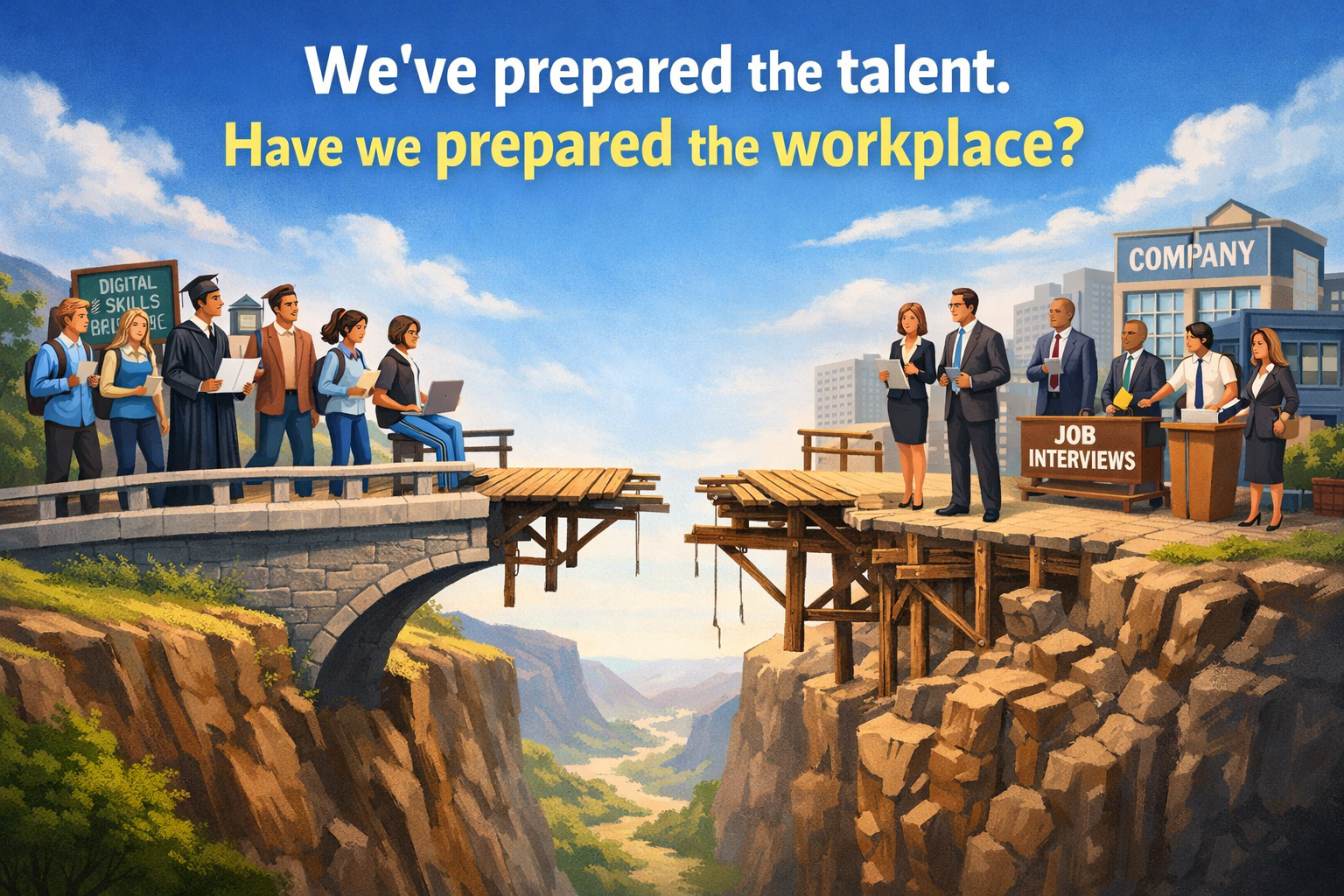
Much of the conversation around youth employment focuses on preparing young people for work.
We talk about skills gaps. We discuss employability. We invest in training programmes, technical education, digital literacy, and workplace readiness.
These investments matter.
But I increasingly find myself asking a different question:
As we work to prepare young people for the workforce, are organisations preparing themselves for the next generation of talent?
Across our work at WAVE, we meet young people who are eager to learn, willing to work, and committed to building meaningful careers. Yet many continue to encounter workplaces that struggle to effectively integrate, support, and develop early-career talent.
The challenge is not always a lack of jobs.
Sometimes, there is a disconnect between what young people need to succeed and what organisations are designed to provide.
Many employers speak about the difficulty of finding job-ready talent. Yet organisational readiness receives far less attention. Are managers equipped to coach first-time employees? Are onboarding systems designed to support young professionals entering the workplace for the first time? Are organisations creating clear pathways for growth, feedback, and development?
These questions matter because employability is not created by training alone.
It is created when capable young people enter environments that are prepared to help them succeed.
This challenge feels particularly important across Africa, where millions of young people enter the labour market each year while formal job creation struggles to keep pace. The scale of the youth employment challenge means that workforce development cannot be viewed solely through the lens of preparing young people. We must also consider the readiness of the institutions, employers, and systems they are entering.
This is one of the reasons partnerships between workforce development organisations and employers matter so much.
When employers become active participants in developing talent rather than passive recipients, outcomes improve significantly. Young people gain exposure to real workplace expectations. Employers gain access to talent pipelines that are better aligned with their needs. The transition from training to employment becomes more effective and sustainable.
The strongest workforce partnerships recognise that talent development is a shared responsibility.
This principle is reflected in initiatives such as Mastercard Foundation's Young Africa Works strategy, which recognises that creating dignified and fulfilling work for young people requires collaboration across employers, educators, governments, and workforce development organisations. Sustainable employment outcomes are rarely created by one actor working alone.
We have seen this firsthand through partnerships that intentionally connect learning with workplace experience. The strongest outcomes often emerge when organisations commit to building talent rather than simply hiring it.
For years, workforce development has largely focused on preparing young people for employers.
The next frontier may be preparing employers to work with young people.
Because employability is not created by training providers alone. It emerges when capable young people meet organisations that are equally prepared to invest in, develop, and retain talent.
Preparing young people for work remains essential.
Preparing organisations for young people is equally important.
The future of youth employment will depend on both.
© Copyright 2024 WAVE
All rights reserved.
Privacy Policy

